
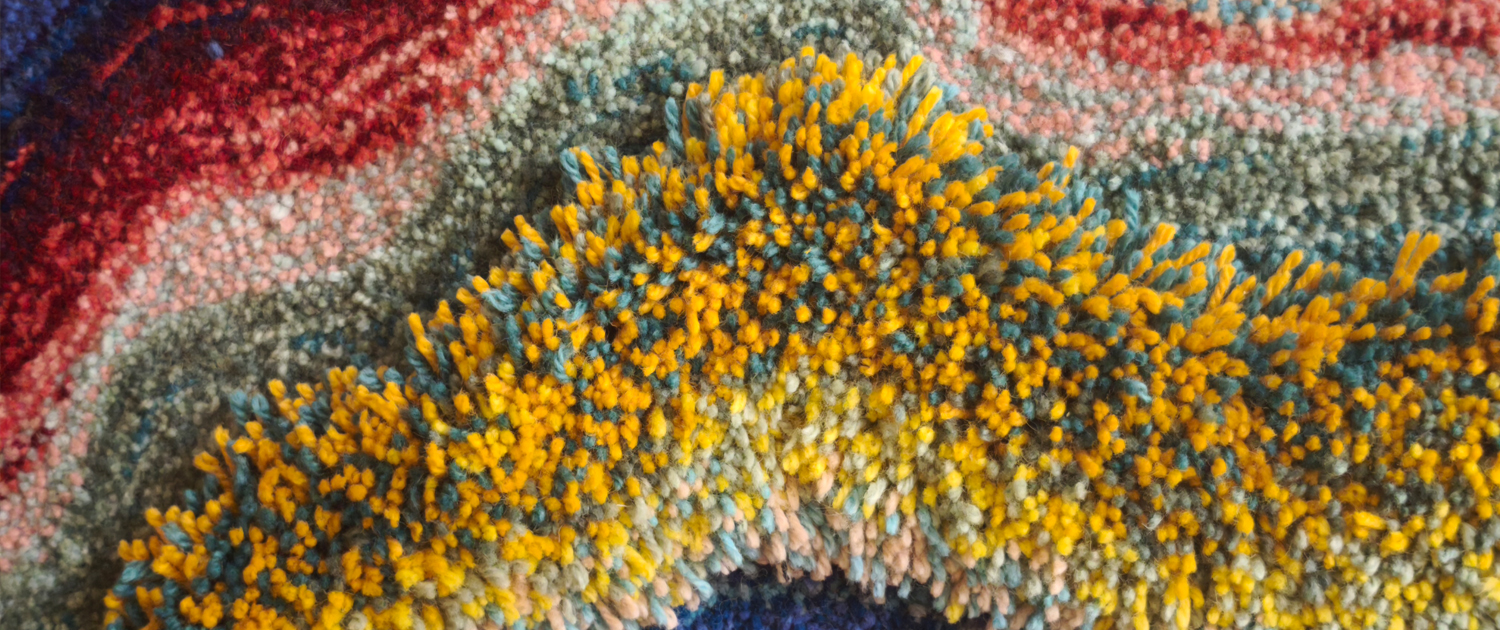
m111-the liminal nebulae, 2026
wool, ceramic, titanium, wood, site-specific installation, 1.20 x 1.30 x 2.50 m.
In the 18th century, the French astronomer Charles Messier, known as a comet hunter, decided to compile a catalogue of unclear celestial bodies distracting his observations in order to facilitate their easy and immediate distinction from the comets he was primarily searching for. Although it initially reached 103 entries, today the Messier Catalogue ends with M110, while added notes containing additional observations were incorporated into the catalogue at a later date.
M111 is proposed as the imaginary continuation of this catalogue, an object discovered after two centuries of silence, without the use of a telescope yet through the artistic imagination. It belongs to the category of emission nebulae, meaning that its glow results from the ionisation of the gas cloud by stars located within or near it.
Nebulae either originate from gas and dust expelled by the explosion of a dying star, such as a supernova, or constitute regions where new stars are born. M111 is situated within this transitional condition, formed from the remnants of stars that have already ceased to exist and from the first traces of stars that have not yet been born, simultaneously representing an ending and a beginning.
By examining the spectra of emission nebulae, astronomers can determine their chemical composition, most consisting of approx. 90% hydrogen with the remainder comprising helium, oxygen, nitrogen and other elements. This chemical composition along with the degree of ionisation of the gases, also determines the colours that are observed. The predominance of hydrogen often produces red or pinkish hues, while the presence of elements such as oxygen can produce bluish or greenish tones. Colour, therefore, functions not only as an aesthetic characteristic but also as an indication of the physical processes taking place within. In M111 colours are not treated as fixed characteristics of a celestial body, but as indications of matter undergoing continuous transformation.
M111 draws on the rites of passage of the ethnographer Arnold van Gennep and the concept of liminality developed by the cultural anthropologist Victor Turner, belonging neither to a previous nor to a subsequent state, but existing at the threshold between the two. This condition is further reinforced by the presence of a polyhedron that refers to the solid depicted in Albrecht Dürer’s “Melencolia I”(1514). This enigmatic form has been the subject of numerous interpretations also associated with the concept of aether, mediating between the earthly and celestial worlds. In M111, the polyhedron functions as a form of transition and a reference to an intermediate space between matter and light, the visible and the invisible, the end and the beginning. Consequently, M111 does not describe a place but a condition, a moment in which something ceases to be what it was without yet having become what it is about to become.
Text: Lea Petrou
Curator: Kostas Prapoglou
Project Manager: Lefteris Moissiadis
SYNASTRY
16 September – 4 October 2026
Opening 16 September 2026
National Library of Greece | SNFCC
4th Floor Atrium
Free admission
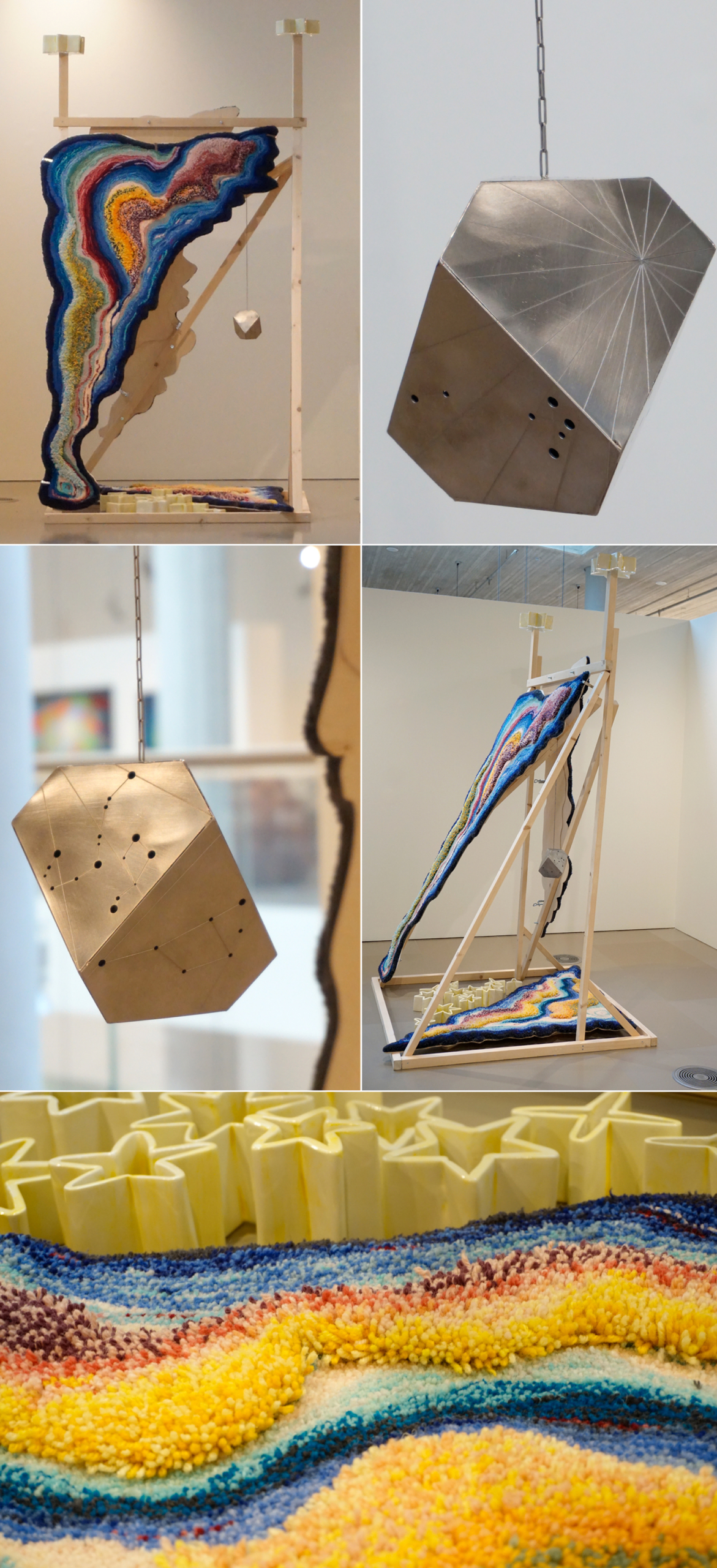
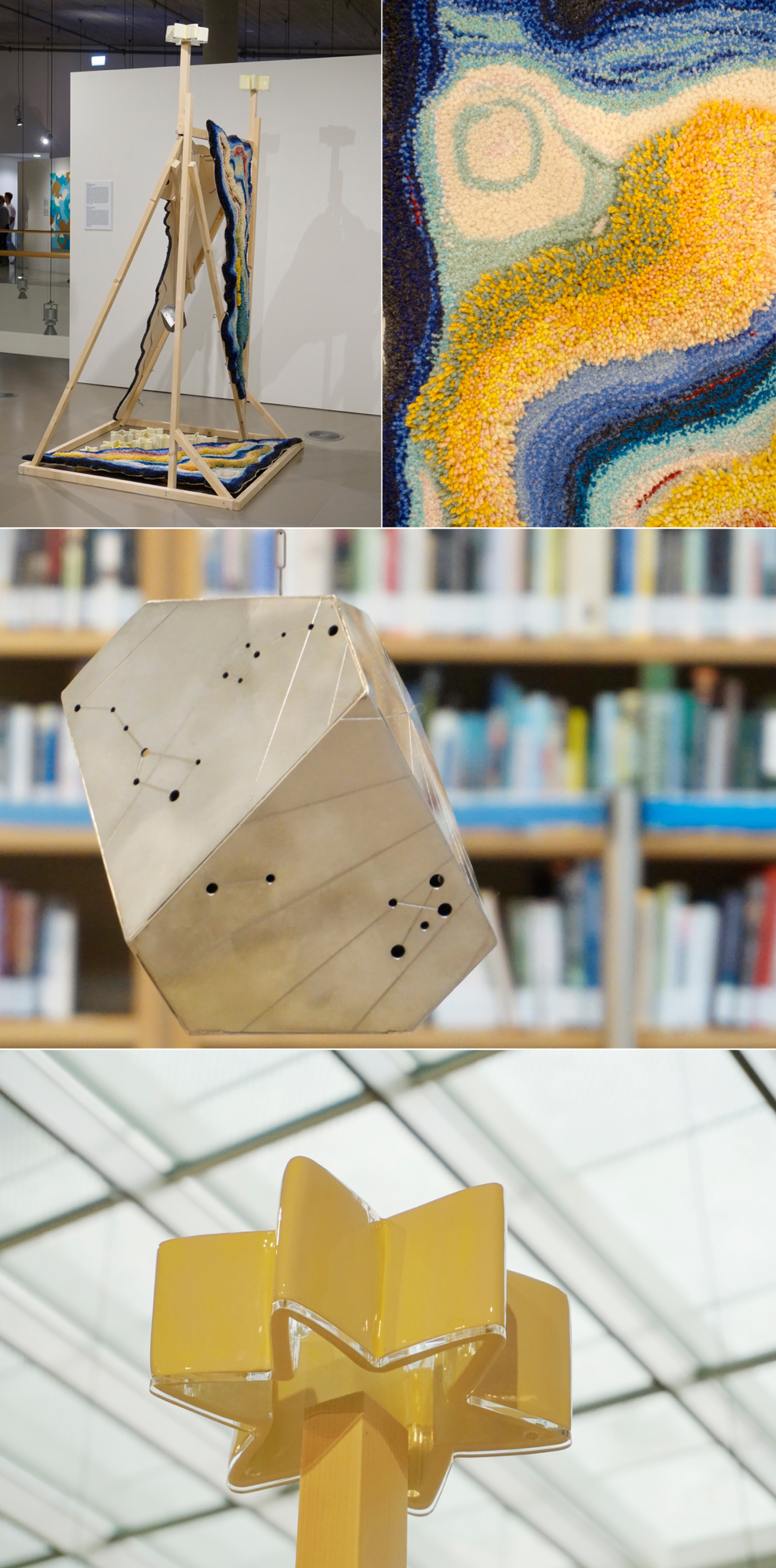
M111-the liminal nebulae, installation documentation.
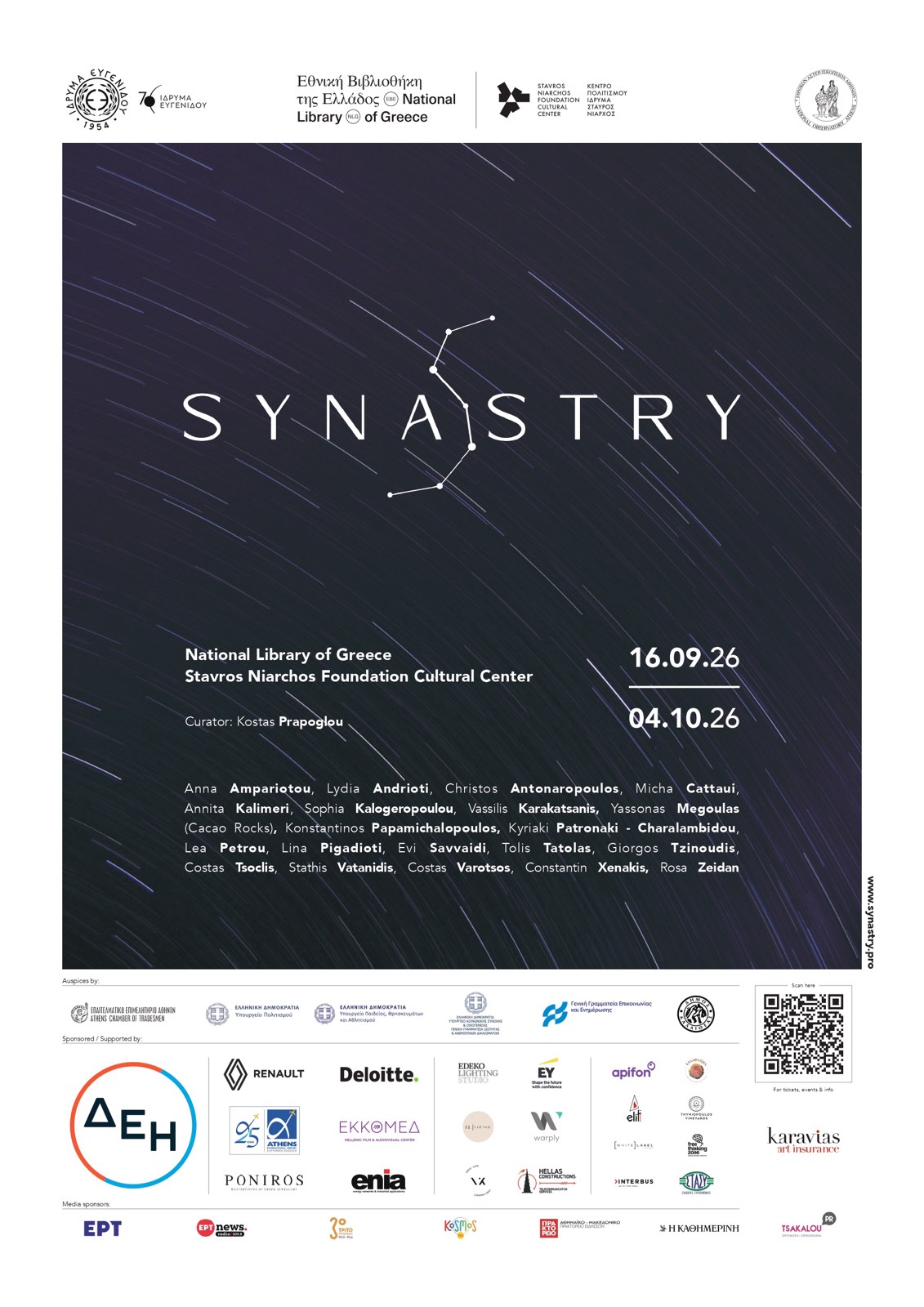
“Synastry” exhibition poster.
